
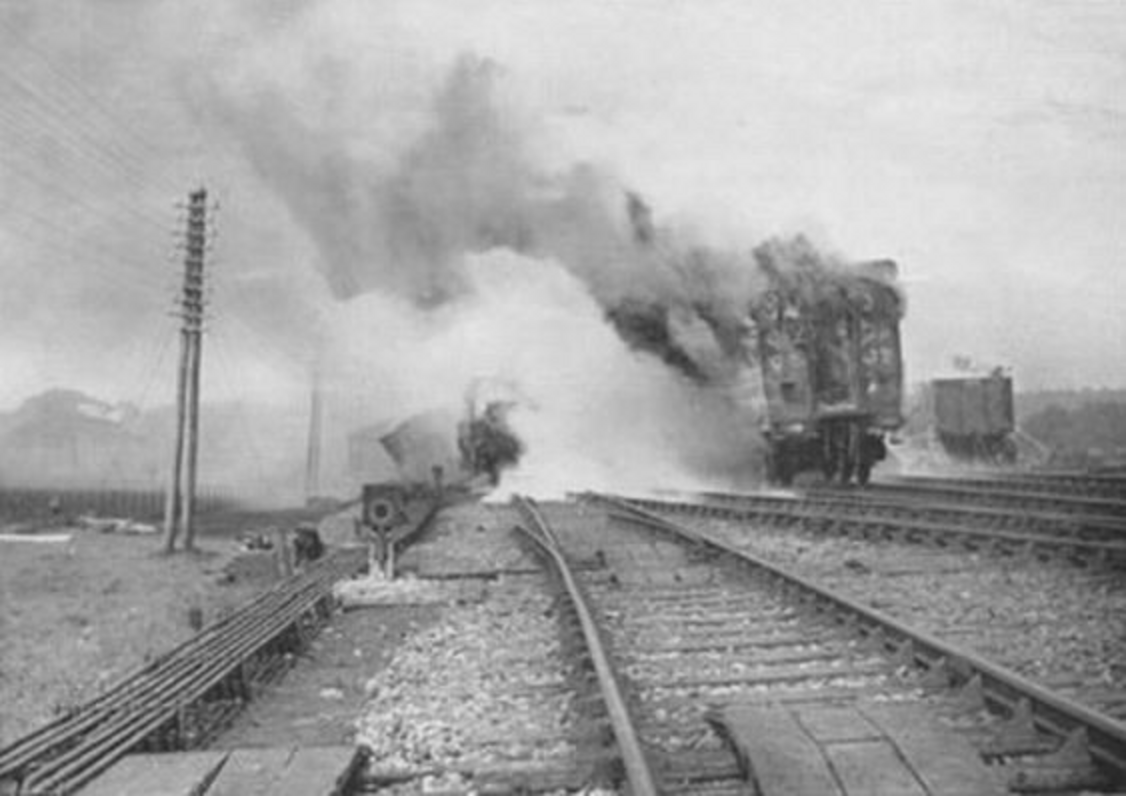
The Quintinshill Rail Disaster of 1915: Britain’s Worst Train Crash
Originally published 22 May 2026
WIn the early hours of 22 May 1915, a quiet passing loop near Gretna Green became the scene of the deadliest rail disaster in British history. The Quintinshill rail crash claimed over 220 lives, most of them young soldiers of the 7th Battalion, The Royal Scots, travelling south to join the First World War. More than a century later, the tragedy remains a stark lesson in how routine negligence can spiral into catastrophe.
A Morning of Fatal Mistakes
Quintinshill was a small but busy signal box on the Caledonian Railway main line between Carlisle and Glasgow. It managed a passing loop used to shuffle slower goods trains out of the way of express services. On the morning of the disaster, the two signalmen on duty — George Meakin and James Tinsley — were already bending the rules.
Their key errors included:
Leaving a local train parked on the northbound main line, where it had no right to be.
Failing to record the train’s presence in the logbook, a deliberate omission to hide a late shift change.
Clearing signals for an oncoming troop train, whose driver had no warning of the obstruction ahead.
Allowing a southbound express to approach, unaware that the line was about to be blocked by wreckage.
Each mistake alone was dangerous. Together, they created the perfect conditions for disaster.
The Triple Collision
At 6:49 a.m., the troop train — carrying nearly 500 Royal Scots soldiers — crashed at full speed into the stationary local train.
Seconds later, the southbound express ploughed into the tangled wreckage.
The impact was devastating, but the fire that followed made the tragedy uniquely horrific. Many carriages were built of wood and lit by gas, a common but hazardous design of the era. The collision ruptured the gas reservoirs, and within minutes the wreckage was engulfed in flames so intense that many victims could never be identified.
Survivors later described scenes of chaos: soldiers smashing windows with rifle butts, men trapped by twisted metal, and locals running from nearby cottages to help pull the injured clear.
The Human Toll
The official death toll was 227, though some historians believe the true figure may have been higher. Most of the dead were Royal Scots soldiers, many barely out of their teens. The battalion had been heading to Liverpool to embark for Gallipoli; instead, it suffered its greatest loss not on a battlefield, but on a quiet stretch of railway in Dumfriesshire.
The impact on Edinburgh and the Lothians — where the battalion had been raised — was profound. Streets were lined with grieving families, and funerals continued for days. The disaster left a deep scar on the communities the Royal Scots called home.
Inquiry, Blame, and Controversy
The official inquiry was unequivocal: the signalmen’s negligence was the primary cause. Both Meakin and Tinsley were convicted of culpable homicide and imprisoned. Their failure to follow basic safety procedures — especially the falsified train register — was judged unforgivable.
Yet the case has remained controversial. Critics argue that the Caledonian Railway’s culture of lax discipline, fatigue, and informal shortcuts created an environment where such mistakes were almost inevitable. Wartime censorship also limited public scrutiny, muting criticism of the railway company and the government.
Legacy and Lessons
Today, memorials mark the site of the disaster, and the Royal Scots continue to honour the men who died. The tragedy also drove significant changes in railway safety, including:
Stricter signalling rules
Better oversight of staff
The gradual replacement of gas lit wooden carriages
Quintinshill stands as a powerful reminder that even the most robust systems depend on human vigilance.
Why Quintinshill Still Matters
The Quintinshill disaster is more than a historical footnote. It is a story about responsibility, complacency, and the devastating consequences of small errors left unchecked. In an age of increasingly automated transport, the events of 1915 still echo: technology can reduce risk, but it cannot eliminate the need for care, discipline, and integrity.