
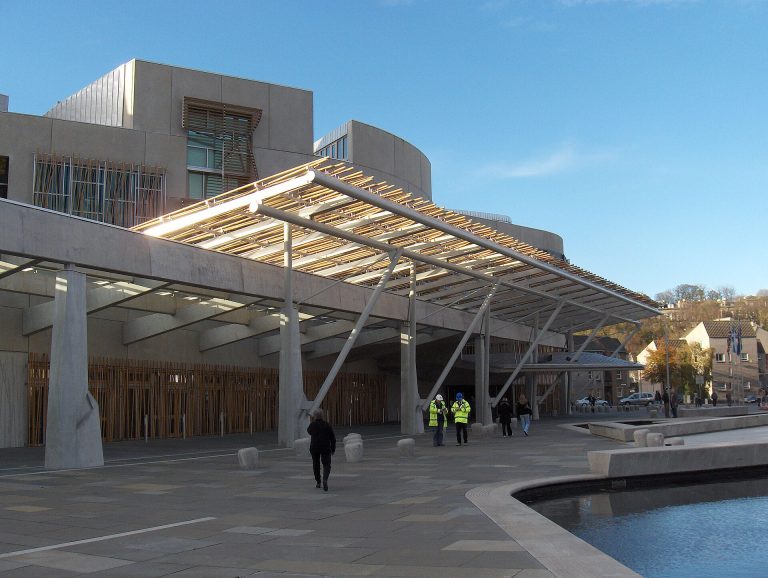
The Opening of the Scottish Parliament: A Landmark Day in Modern Scottish History
Originally published 1 July 2026
The 1st of July 1999 is remembered as one of the most transformative dates in Scotland’s modern political journey. On that summer morning, after nearly three centuries without its own legislature, Scotland witnessed the official opening of the Scottish Parliament in Edinburgh. It was a moment charged with symbolism, pride, and a sense of renewal.
For many, it marked not just the beginning of a new political institution, but the reawakening of a national voice that had been absent since the early eighteenth century.
A Parliament Lost — and Found Again
To understand the significance of the 1999 opening, it’s important to look back to 1707, when the Acts of Union brought Scotland and England together under a single Parliament at Westminster. The old Parliament of Scotland adjourned, never to meet again. For generations, political decisions affecting Scotland were made hundreds of miles away in London.
Although Scotland retained its distinct legal and educational systems, the absence of a national legislature remained a point of debate, frustration, and identity.
Throughout the twentieth century, the idea of restoring a Scottish Parliament resurfaced repeatedly. Movements for home rule grew, cultural confidence strengthened, and political momentum built. The turning point came with the 1997 devolution referendum, when the people of Scotland voted decisively in favour of establishing a new Parliament with powers over domestic affairs.
That democratic mandate set the stage for one of the most significant constitutional changes in the United Kingdom’s history.
A Historic Ceremony in Edinburgh
The opening ceremony on 1 July 1999 took place at the General Assembly Hall on the Mound, where the Parliament sat temporarily until the Holyrood building was completed. The day was filled with pageantry, tradition, and a palpable sense of anticipation.
Queen Elizabeth II formally opened the Parliament, acknowledging the importance of the moment and the role the new institution would play in Scotland’s future. Crowds gathered across Edinburgh, lining streets and watching live broadcasts. The atmosphere was celebratory but also reflective — a recognition that Scotland was stepping into a new chapter of self‑government.
One of the most memorable contributions came from Donald Dewar, Scotland’s first First Minister. His speech captured the emotion of the day and the weight of history behind it. He famously declared: “There shall be a Scottish Parliament. The words we have longed to hear are now reality.”
Dewar’s words echoed across the chamber and across the nation, becoming one of the defining statements of modern Scottish politics.
A Parliament Designed for the People
From the outset, the Scottish Parliament was built to be different from Westminster. Its structure and processes were designed to reflect modern democratic values and encourage public participation.
Proportional representation ensured that a wider range of political voices could be heard.
Committee‑driven scrutiny strengthened accountability and encouraged cross‑party cooperation.
Accessibility and openness were placed at the heart of the institution, with the public encouraged to engage directly with MSPs and committees.
This wasn’t simply a return to the past. It was a reinvention — a Parliament shaped for a contemporary Scotland, with a focus on transparency, fairness, and representation.
Why 1 July 1999 Still Matters
The opening of the Scottish Parliament reshaped Scotland’s political landscape. It gave the nation control over key areas such as health, education, justice, transport, and the environment. It also provided a platform for Scotland to express its distinct social priorities and cultural identity within the wider UK.
For many Scots, the day symbolised renewed confidence: a belief that decisions affecting Scotland should be made in Scotland. It marked the beginning of a political journey that continues to evolve, influencing debates about devolution, governance, and Scotland’s future place in the United Kingdom.
A Lasting Legacy
More than two decades later, the events of 1 July 1999 remain deeply significant. The Parliament at Holyrood has become a central part of Scottish public life, shaping policy, debate, and national direction. Whether one views devolution as a stepping stone or a destination, the opening of the Scottish Parliament stands as a landmark moment — a day when Scotland reclaimed a voice that had been silent for nearly 300 years.