
The Massacre of Glencoe: Betrayal in a Highland Glen
Originally published 8 January 2026
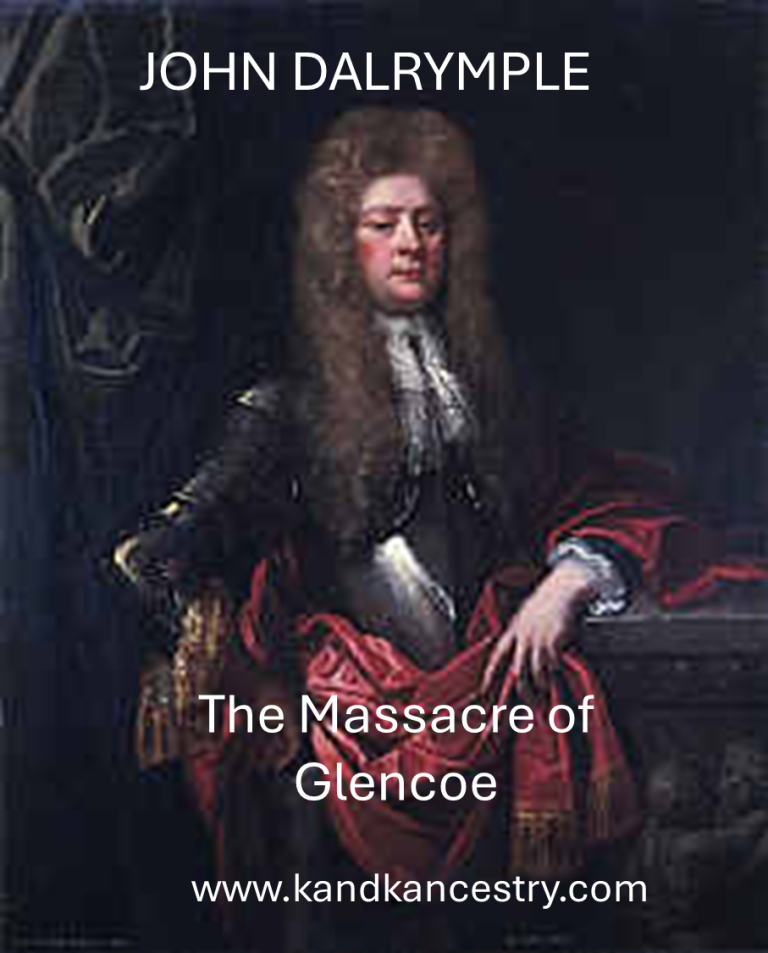
On this day, 8th January 1707 Sir John Dalrymple, 1st Earl of Stair died. He was the man who, as Secretary of State for Scotland was behind the 1692 Massacre of Glencoe.
On a winter morning in February 1692, one of the most haunting episodes in Scottish history unfolded in the rugged beauty of Glencoe. Known simply as the Massacre of Glencoe, it remains a symbol of betrayal, political manipulation, and the deep fractures that shaped the Highlands.
A Nation in Upheaval
The late 17th century was a turbulent time for Scotland. The Glorious Revolution of 1688 had deposed King James VII and II, replacing him with William III and Mary II. Many Highland clans—including the MacDonalds of Glencoe—remained loyal to the exiled Stuart king.
To secure control, the new government demanded that all clan chiefs swear an oath of allegiance by 1 January 1692. Those who complied would be pardoned; those who did not would face “letters of fire and sword” — a chilling promise of violent retribution.
A Deadline Missed — and a Trap Set
Chief Alasdair MacIain of Glencoe set out to take the oath on 31 December 1691, but found no magistrate at Fort William to receive it. Forced to travel to Inveraray, he finally swore allegiance on 6 January 1692 - late, but in good faith, believing his clan was now safe.
It wasn’t.
Behind the scenes, Sir John Dalrymple, the Scottish Secretary of State, had already decided to make an example of the Glencoe MacDonalds. Their reputation for lawlessness and their political loyalties made them an easy target.
Hospitality Turned to Murder
In early February, around 120 soldiers of Argyll’s Regiment, commanded by Captain Robert Campbell of Glenlyon, arrived in Glencoe. They were welcomed as guests—fed, sheltered, and treated with Highland hospitality for nearly two weeks.
Then, before dawn on 13 February 1692, the order was given.
The soldiers turned on their hosts.
Around 30 MacDonalds were killed in their homes or as they fled into the snowbound hills.
Among the dead were MacIain himself, several leading men, and even women and children.
Many more perished from exposure after escaping into the mountains.
The attack shocked Scotland. Even in an era of clan warfare, the violation of hospitality was considered unforgivable.
Why Glencoe Still Matters
The massacre was not simply a clan feud—despite the Campbells’ involvement. It was a calculated act of state violence designed to intimidate the Highlands into submission.
Its legacy endured:
It fuelled Jacobite resentment for decades.
It became a rallying cry in later uprisings.
And today, it stands as a stark reminder of how political decisions made far from the glens could devastate Highland communities.
Walking through Glencoe now, with its towering cliffs and quiet glens, it’s easy to feel the weight of that history. The landscape holds the memory of those who died—not just as victims of a massacre, but as part of a wider story of resilience, identity, and the struggle for Scotland’s future.