
The Gloup Disaster of 1881: Yell’s Day of Sorrow and Scotland’s Shared Maritime Loss
Originally published 20 July 2026
On 20 July 1881, the people of Yell faced one of the darkest days in Shetland’s maritime history. Known ever since as the Gloup Disaster, it unfolded off the island’s east coast near the small fishing station called the Gloup — a narrow inlet where haaf fishermen launched their sixareen boats into the North Sea. It was a place of everyday labour, familiar and trusted.
But on that summer afternoon, a sudden storm transformed routine into catastrophe, leaving a wound that would shape the island’s memory for generations.
The fishermen who set out from the Gloup and other nearby stations were experienced haaf men. Their sixareens — long, open, clinker‑built boats — were designed for speed and endurance, but offered little protection when the weather turned. That morning had been calm and workable, the kind of day when families watched their men row out with confidence. No one imagined that the sea would rise so violently before they returned.
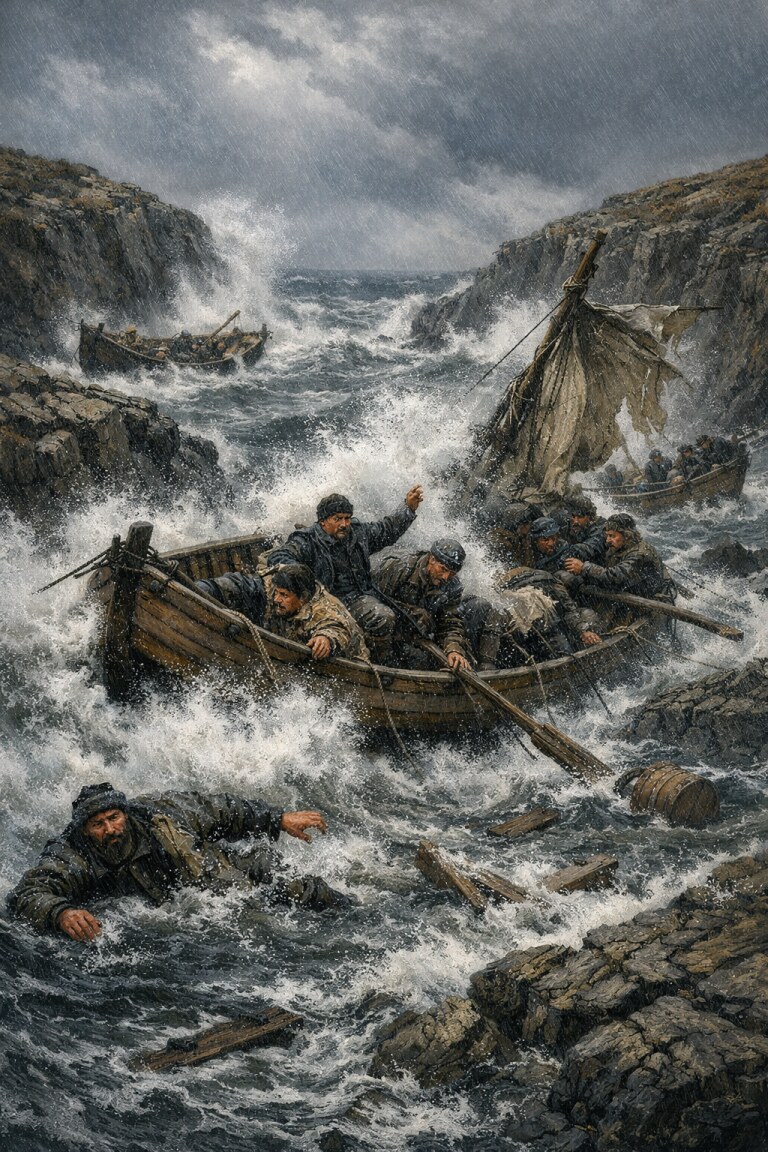
By early afternoon, the sky began to darken. What followed was not a slow deterioration of weather, but a sudden, explosive storm — the kind that Shetland folklore remembers with dread. Winds shifted without warning. Waves rose from multiple directions. The sea became chaotic and unpredictable. Fishermen heading back toward the Gloup found themselves fighting a storm that seemed to arrive all at once.
Eyewitnesses later described the sea as “lifting everywhere,” with waves smashing into the coastline and surging into the narrow inlet. Boats tried desperately to reach shelter, but the storm struck faster than any man could row. Some sixareens were driven against the rocks. Others capsized in the boiling water. Men clung to oars, driftwood, and overturned hulls, battling for their lives in the daylight — not darkness, but a storm so fierce it felt as though the afternoon had turned instantly to winter.
On shore, families could see the storm breaking over the returning fleet. They watched the sea swallow boats and heard the roar of waves crashing against the cliffs. There was nothing they could do but wait, hope, and fear.
By evening, the scale of the tragedy became clear. Fifty‑eight men from Yell and the surrounding area had been lost. Entire families were shattered. Some households lost fathers and sons together. Others lost brothers, cousins, or neighbours who had fished side by side for years. In a small island community, grief does not spread outward — it sinks deep, touching every croft, every hearth, every memory.
The Gloup Disaster did not stand alone. Across Scotland, coastal communities endured similar tragedies throughout the 19th century. Sudden storms and fragile open boats left fishermen vulnerable in every direction — in the North Sea, the Minch, and the open Atlantic. Whether involving single boats or entire fleets, these losses left deep scars on fishing towns and crofting villages across the country.
Together, they form a national story of hardship, resilience, and the constant risks faced by those who lived by the sea.
Today, the Gloup on Yell is peaceful. The narrow inlet still cuts into the coastline, its cliffs topped with grass and peat, its waters calm on most days. A memorial sculpture stands nearby, created to honour the men who died and the families who endured the loss. It is a place of quiet reflection — a reminder that behind every Shetland tragedy lies not only sorrow, but courage.
More than 140 years later, the memory of the Gloup Disaster remains part of Shetland’s identity. It reminds us of the dangers faced by generations of fishermen, and of the communities who bore those risks with strength and solidarity.
When we speak of the Gloup today, we honour not only the men who were lost, but the island that held them, the families who loved them, and the sea that shaped their lives — just as it shaped the stories of countless Scottish communities touched by the waters surrounding our shores.