
The Evacuation of St Kilda: The Day an Island Community Left Home
Originally published 29 August 2025
ON THIS DAY….29TH AUGUST 1930
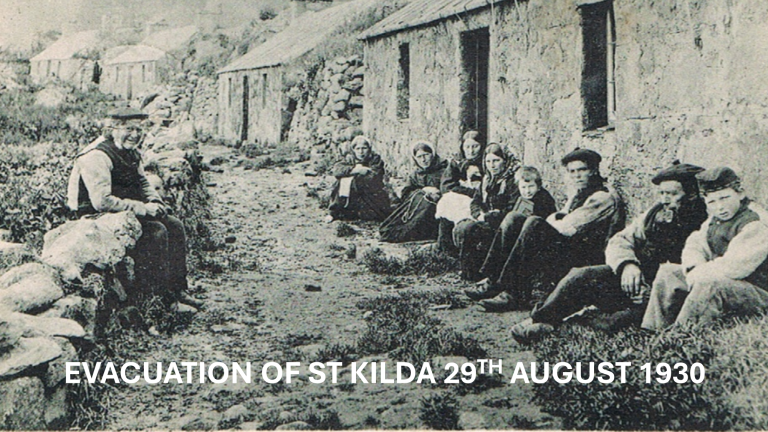
At 8am on 29 August 1930, HMS Harebell pulled away from the harbour on Hirta, the largest island in the St Kilda archipelago. On board were the last 36 islanders—leaving behind not just their homes, but a way of life shaped by centuries of isolation, courage, and community.
For over 2,000 years, people had lived on St Kilda. They farmed, fished, and most famously, harvested seabirds and their eggs from towering cliffs. Their culture was steeped in this seabird economy: songs told of daring climbs, and their language brimmed with terms for fowling gear and bird behaviour. Over 1,200 cleitean—stone storage huts—still dot the landscape, silent witnesses to a life lived in rhythm with wind and wing.
But by the early 20th century, cracks had begun to show. Victorian tourism and the presence of soldiers during WWI exposed the islanders to modern comforts and wages. Young people began leaving for better opportunities, and the population dwindled. In 1852, 36 islanders emigrated to Australia. By 1930, only 36 remained.
The final decision to evacuate came after a series of tragedies. In July 1930, two young women—Mary Gillies, aged 22, and another Mary Gillies, aged 35 and pregnant—died from treatable illnesses. With no doctor and limited access to medical care, the community was devastated. Earlier, five men had drowned when their boat capsized in a heavy swell. None of the islanders could swim.
Only one body was recovered; two of the lost men were uncles of five-year-old Norman John Gillies, who would later become one of the last surviving evacuees.
On 10 May 1930, the islanders petitioned the Scottish Government for help. Their request was not forced—it was a heart-wrenching choice made out of necessity. As HMS Harebell sailed away, some of the older islanders looked back at the shrinking outline of Hirta. The younger ones looked forward, toward an uncertain future.
Today, St Kilda is a dual UNESCO World Heritage Site, celebrated for its natural beauty and cultural significance. The ruins of Hirta’s village remain, weathered but proud. The cliffs still echo with the cries of gannets and puffins. And the story of the evacuation—of resilience, loss, and quiet dignity—continues to stir hearts across the Scottish diaspora.