
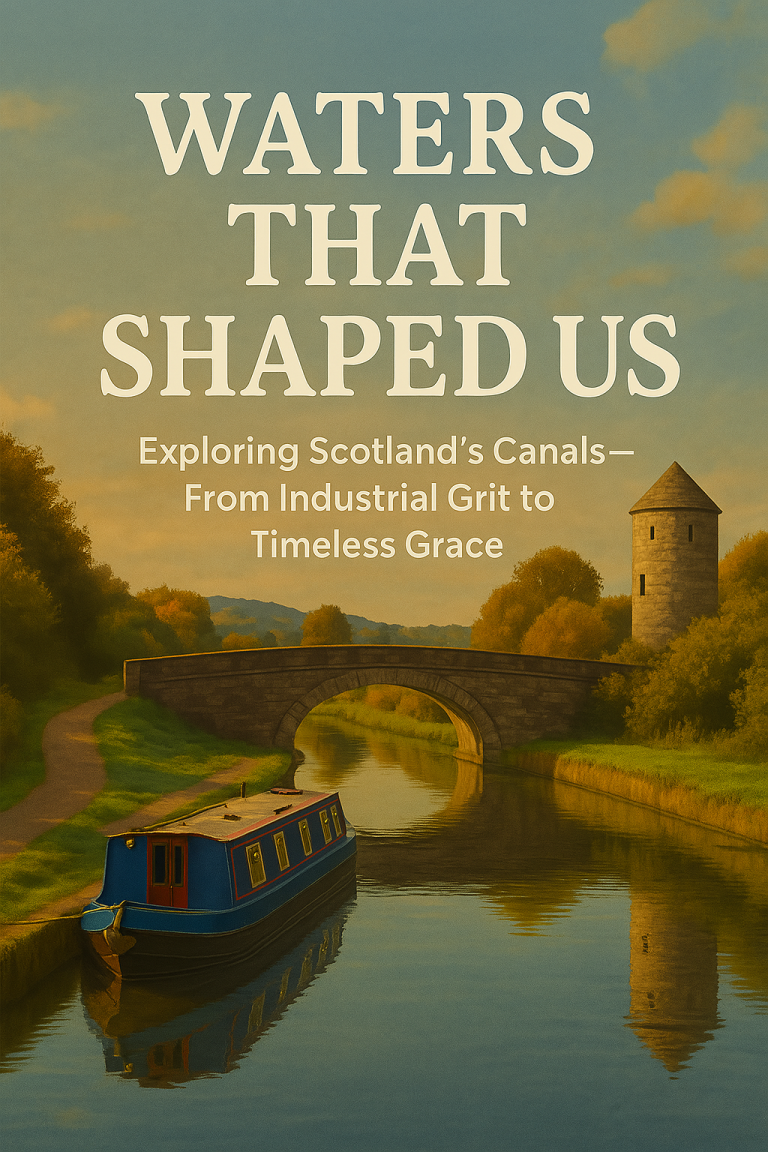
Scotland’s Canals: The Waterways That Powered a Nation
Originally published 10 August 2025
The story of Scotland’s canals isn’t just about boats and locks—it’s a tale of bold engineering, industrial dreams, and the lives woven along the watery corridors. These were not idle ditches; they were superhighways carved by hand and vision, built to move coal, timber — and people.
The dream of Scottish canals began with a problem: how to efficiently move bulky goods across unforgiving terrain. Roads were primitive, and rivers unpredictable. The solution? Artificial waterways.
The Forth and Clyde Canal (1768–1790): Scotland’s first major canal, envisioned by John Smeaton and completed by Robert Whitworth. Running 35 miles, it linked the River Forth at Grangemouth to the River Clyde at Bowling. Glasgow’s ascent as an industrial powerhouse was inseparable from the coal, iron and timber that flowed through this liquid artery.
The Caledonian Canal (1803–1822): A heroic feat led by Thomas Telford. Stretching 60 miles through the Great Glen, it connected Inverness to Fort William—using lochs and manmade channels. While intended to serve seagoing vessels and boost Highland trade, it suffered from being too shallow and narrow for evolving ship designs.
The Union Canal (1818–1822): Designed by Hugh Baird, this level canal snaked 31 miles from Falkirk to Edinburgh with no locks—elevated engineering in every sense. It aimed to bring coal directly into Edinburgh, joining the Forth and Clyde Canal via the Falkirk basin.
The canals were built by “navvies”—manual labourers known for brute strength and staggering endurance. They hacked through rock, clay and marshland using picks and shovels, often sleeping rough and living transient lives.
Work crews lived in makeshift huts, moved from section to section, and developed their own culture—marked by fierce camaraderie, local folklore, and sadly, dangerous working conditions.
Locks and aqueducts were the miracle tech of the day. The Avon Aqueduct near Linlithgow still stands as Scotland’s longest and tallest, built with daring ambition.
Once opened, the canals transformed commerce.
Coal from Lanarkshire powered the blast furnaces and steam engines of Glasgow and Edinburgh. Whisky barrels and grain headed out from rural distilleries to the ports. Timber and slate from the Highlands travelled south to build cities.
They also changed how people lived—lockkeepers, boatmen, warehouse crews, and canal-side traders formed close-knit communities. Inns and shops sprang up along towpaths.
By the late 1800s, railways overtook canals. Trains were faster, cheaper, and more flexible. Many canals were abandoned, drained, or allowed to decay.
But in the late 20th century, restoration began. The Falkirk Wheel (opened 2002) reconnects the Union and Forth and Clyde Canals—a stunning rotating boat lift symbolizing canal rebirth. Recreational use surged, with canal walks, wildlife spotting, kayaking, and heritage tourism breathing new life into old waters.
Scotland’s canals are more than historical footnotes. They are mirrors of its industrial spirit, its community resilience, and its willingness to carve beauty from engineering.