Robert the Bruce: Scotland’s Warrior King and Long Road to Freedom
Originally published 7 June 2026
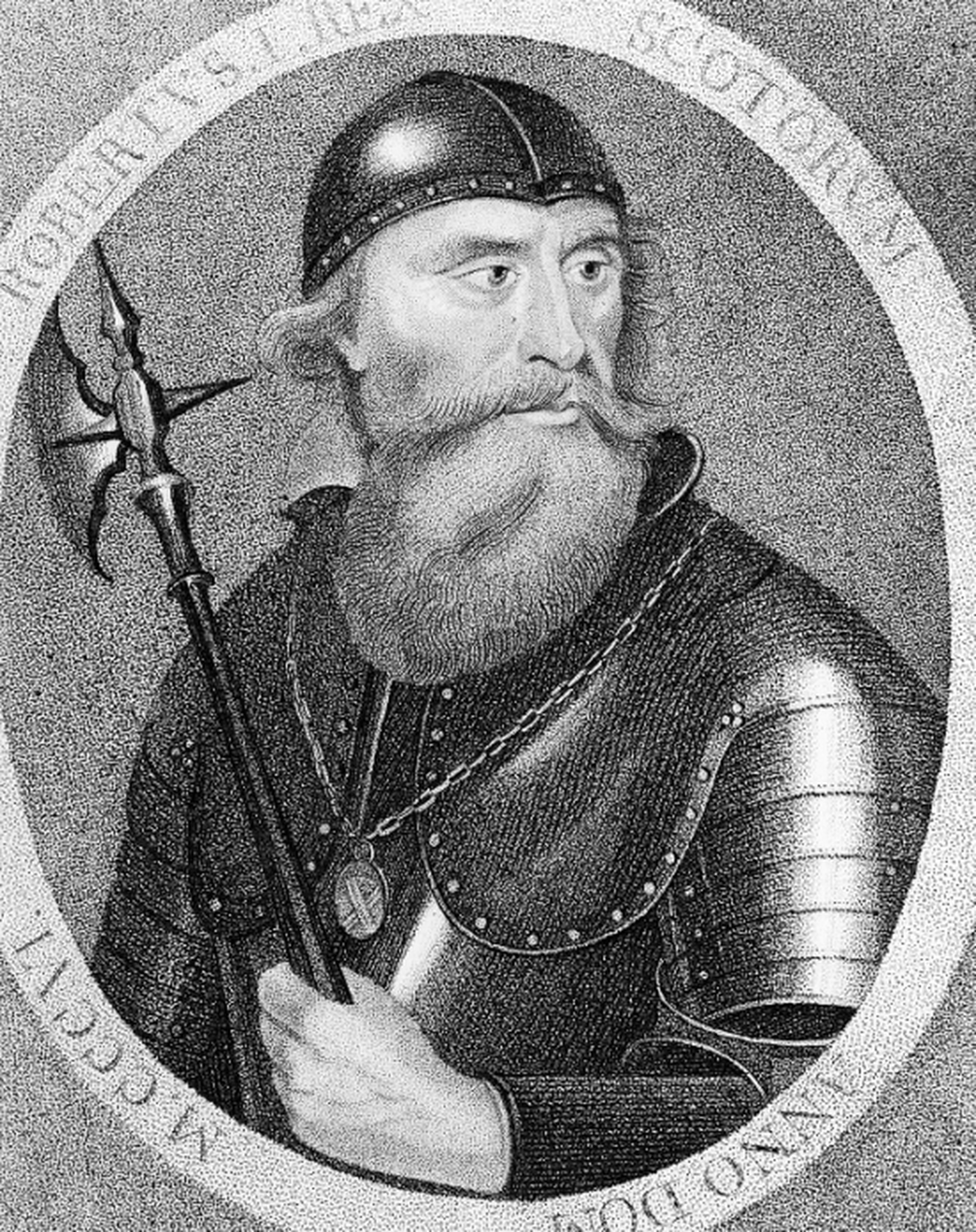
Robert the Bruce (1274–1329) stands as one of Scotland’s most enduring national heroes — a king whose determination, political skill, and military brilliance secured Scotland’s independence after decades of English domination. His story is not a simple tale of heroism, but a complex journey marked by ambition, exile, civil war, and ultimately, triumph.
A Noble Birth with a Claim to the Throne
Born on 11 July 1274, probably at Turnberry Castle in Ayrshire, Robert came from a powerful Anglo‑Norman and Gaelic lineage. His grandfather, known as Robert the Competitor, had been one of the leading claimants to the Scottish throne during the succession crisis of 1290, known as the Great Cause. When King Edward I of England intervened and awarded the crown to John Balliol, the Bruce family felt deeply wronged.
This dynastic rivalry would shape Robert’s entire life.
Scotland in Turmoil
By the mid‑1290s, Scotland was under increasing pressure from Edward I — the “Hammer of the Scots.” After Balliol’s removal in 1296, Edward attempted to rule Scotland directly. Resistance grew, most famously under William Wallace, and Robert initially shifted allegiances between the English and the Scottish factions as he navigated the dangerous political landscape.
In 1298, Robert was appointed one of the Guardians of Scotland, sharing power with his rival John Comyn, nephew of Balliol. Their rivalry would soon turn deadly.
The Murder at Greyfriars and the Crown
In February 1306, Robert met Comyn at Greyfriars Kirk in Dumfries. A quarrel erupted, and Robert stabbed Comyn — a shocking act that changed Scottish history. Whether premeditated or spontaneous, it eliminated his greatest rival but also led to his excommunication.
Weeks later, on 25 March 1306, Robert the Bruce was crowned King of Scots at Scone.
But his early reign was disastrous. Defeated at the Battle of Methven, hunted by English forces, and betrayed by Scottish nobles, Bruce was forced into hiding. His family suffered terribly; several were captured, imprisoned, or executed.
Exile, Recovery, and the Rise of a Guerrilla King
Bruce’s comeback began in 1307, when he emerged from hiding and launched a guerrilla campaign across Scotland. Victories at Loudoun Hill, Glen Trool, and Inverurie showed his tactical brilliance and ability to inspire loyalty.
By 1314, Bruce had reclaimed much of Scotland — but one decisive battle remained.
Bannockburn: A Nation’s Turning Point
The Battle of Bannockburn (23–24 June 1314) was Bruce’s defining moment. Facing a much larger English army under Edward II, Bruce’s forces used terrain, discipline, and schiltron formations to devastating effect. The English army collapsed, and Scotland’s independence seemed within reach.
This victory cemented Bruce’s reputation as a warrior king.
Securing Independence
After years of continued campaigning, diplomacy, and political pressure, Bruce achieved what had eluded Scotland for decades. In 1328, the Treaty of Northampton formally recognised Scotland as an independent kingdom and Robert the Bruce as its rightful king.
It was the first time England had ever acknowledged Scotland’s sovereignty.
Final Years and Legacy
Robert the Bruce died on 7 June 1329 at his manor in Cardross, aged 54. His body was buried at Dunfermline Abbey, while his heart — according to his wishes — was taken on crusade and later interred at Melrose Abbey.
His son, David II, succeeded him, and through his daughter Marjorie, Bruce became the ancestor of the House of Stewart — the dynasty that would eventually unite the crowns of Scotland and England.
Today, Bruce is remembered not only as a warrior but as a statesman who reshaped Scotland’s destiny.
Why Robert the Bruce Still Matters
Robert the Bruce’s story resonates because it is fundamentally about resilience. He endured defeat, exile, betrayal, and excommunication — yet he rebuilt, reorganised, and ultimately prevailed. His leadership transformed a fractured medieval kingdom into a united nation capable of resisting one of Europe’s most powerful monarchies.
His legacy endures in:
the Bannockburn monument,
the Declaration of Arbroath,
countless statues across Scotland,
and the national memory of a people who refused to be conquered.