
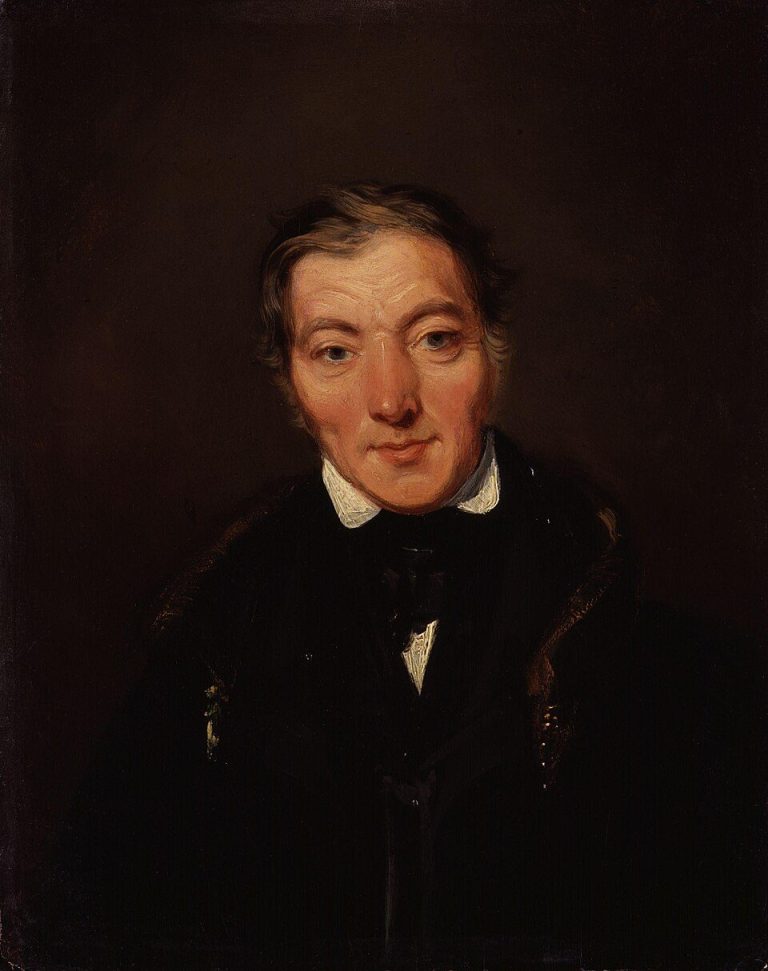
Robert Owen: The Radical Visionary Who Reimagined New Lanark
Originally published 14 May 2026
When people speak about Scotland’s great social reformers, the conversation often turns to Robert Owen — a man whose ideas were so far ahead of their time that they still feel strikingly modern. Born on 14th May 1771 in Newtown, Wales, Owen would go on to transform a modest cotton‑spinning village on the banks of the River Clyde into one of the most progressive industrial communities in the world. That village was New Lanark, and its story is inseparable from Owen’s bold belief that society could be reshaped through education, fairness, and humane working conditions.
A Mill Village with a Difference
When Owen arrived at New Lanark in 1800, the mills were already successful, but the living conditions were harsh. Child labour was common, education was minimal, and workers lived in cramped, unsanitary housing. Many industrialists of the era accepted this as the unavoidable cost of progress. Owen refused to.
He believed that character was formed by environment, not inherent moral failings. If people were given decent homes, access to learning, and a sense of dignity, they would flourish — and so would the business. It was a radical idea in the early 19th century, when profit almost always trumped welfare.
Education at the Heart of Reform
One of Owen’s most enduring contributions was his commitment to education. In 1816 he opened the Institute for the Formation of Character, a pioneering school that welcomed children from as young as one year old. It was one of the first infant schools in the world.
Owen rejected rote learning and harsh discipline. Instead, he emphasised:
Play‑based learning
Music, dance, and nature study
Moral development through kindness rather than punishment
This was revolutionary. At a time when many children in Britain spent their days in factories, Owen insisted that childhood should be protected and nurtured.
Better Homes, Better Lives
Owen also invested heavily in improving the physical environment of New Lanark. He introduced:
Clean, well‑maintained housing
A village store selling quality goods at fair prices
A communal washhouse and bathhouse
Strict rules against drunkenness and exploitation
He reduced working hours, banned the employment of children under ten, and ensured that those who did work were treated with dignity. The result was a thriving, healthy community that attracted international attention. Visitors from across Europe and America travelled to New Lanark to witness this “social experiment” in action.
A Businessman with a Social Conscience
What makes Owen particularly fascinating is that he was not a philanthropist working from the outside. He was a successful industrialist, and New Lanark remained profitable throughout his tenure. He proved that humane working conditions and commercial success were not mutually exclusive — a lesson that still resonates in debates about corporate responsibility today.
Yet Owen was never content to stop at one village. He believed his model could reshape society itself.
The Dream of a New Society
Inspired by the success of New Lanark, Owen began advocating for a broader transformation of industrial life. He proposed the creation of self‑sufficient, cooperative communities, where people would live and work together for mutual benefit rather than individual profit.
His most famous attempt was New Harmony in Indiana, USA, founded in 1825. Although the experiment ultimately failed due to internal disagreements and financial strain, it left a lasting legacy in the cooperative movement, progressive education, and social reform.
A Legacy That Endures
Robert Owen died in 1858, but his influence is woven into the fabric of modern social thought. He is remembered as:
A pioneer of workers’ rights
A founder of the cooperative movement
A visionary in early childhood education
A champion of humane industrialism
Today, New Lanark is a UNESCO World Heritage Site — a living reminder of what can happen when compassion and innovation meet. Walking through its restored mills and workers’ homes, it’s easy to see why Owen’s ideas captured the imagination of his contemporaries and continue to inspire reformers, educators, and community builders.
Robert Owen was not perfect, nor were all his experiments successful. But he dared to imagine a world where industry served humanity rather than the other way around. In New Lanark, he proved that such a world was possible — even if only for a moment — and that vision remains one of Scotland’s most remarkable contributions to global social history.