
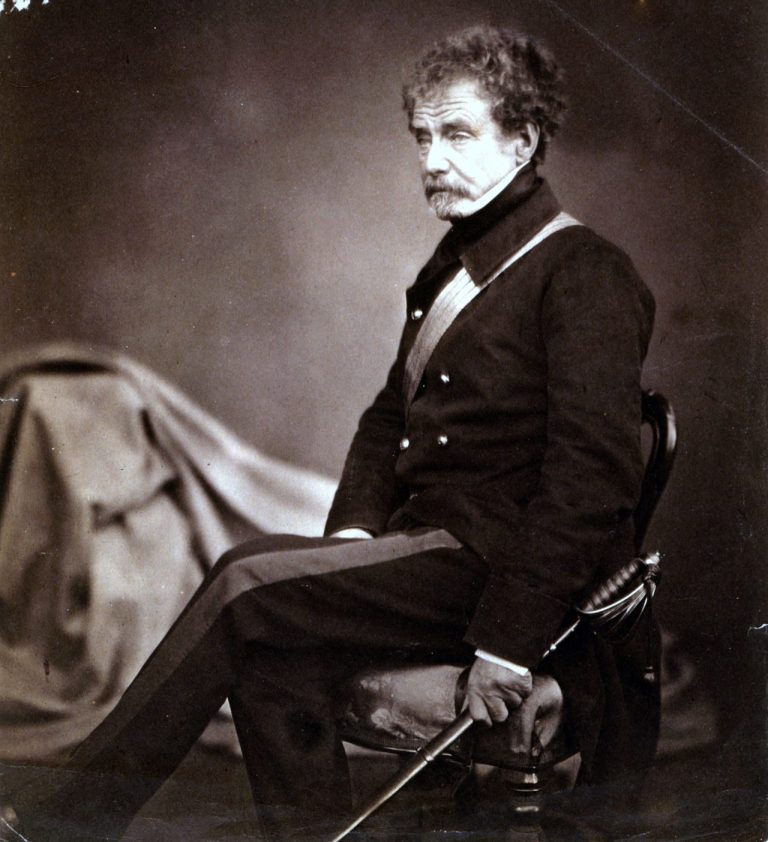
Field Marshal Colin Campbell: A Soldier of His Time, a Legacy Reconsidered
Originally published 14 August 2026
Field Marshal Colin Campbell, 1st Baron Clyde, remains one of Scotland’s most recognisable military figures — a man whose career stretched from the Napoleonic era to the Indian Rebellion of 1857. His life reflects not only personal courage and discipline but also the wider realities of Britain’s imperial expansion, a subject viewed far more critically today than in Campbell’s own lifetime.
This blog explores Campbell’s story with both admiration for his qualities as a soldier and awareness of the complex, often painful historical context in which he served.
Early Life: From Colin Macliver to Colin Campbell
Born in Glasgow in 1792 as Colin Macliver, Campbell’s early life was modest. His uncle, Colonel John Campbell, helped secure him a place at the Royal Military and Naval Academy, setting him on a path that would define his entire life. A well‑known anecdote claims the Duke of York mistakenly enlisted him under the surname “Campbell,” and the name stayed with him throughout his career.
Whatever the truth of the story, it marked the beginning of a military journey that would span nearly fifty years.
Forged in the Peninsular War
Campbell’s first taste of battle came in the Peninsular War, fighting at Roliça, Vimeiro, and enduring the harsh retreat to Corunna. His bravery at Barossa earned him the attention of senior officers, and he was twice wounded at San Sebastián while leading storming parties.
These campaigns were brutal, chaotic, and costly — reminders that even celebrated victories came at immense human expense. Campbell’s reputation for steadiness and courage was forged in these unforgiving conditions.
Across the Empire: China and India
Campbell’s career took him across the expanding British Empire, serving in the First Opium War and later the Second Anglo‑Sikh War. These conflicts, once framed as necessary for British interests, are now widely recognised as part of a system that imposed political and economic control on other nations.
Campbell himself was known as “Old Careful”, a commander who prioritised the safety of his men. Yet the campaigns he fought in were inseparable from the wider imperial project — a reality that modern readers rightly scrutinise.
Crimea and the Thin Red Line
Campbell’s most iconic moment came during the Crimean War, where he commanded the Highland Brigade. At Balaclava, his 93rd Highlanders formed what became known as “the thin red line”, standing firm against a Russian cavalry charge.
The image became legendary, symbolising discipline and resolve. But even here, the glory sits alongside the grim truth: the Crimean War was a conflict marked by mismanagement, suffering, and staggering loss of life on all sides.
Campbell’s leadership was calm, disciplined, and deeply respected — qualities that defined him more than any single battle.
Commander-in-Chief in India: Leadership in a Troubled Time
During the Indian Rebellion of 1857, Campbell was appointed Commander‑in‑Chief in India. His campaigns included:
The relief and evacuation of Lucknow
The defeat of Tatya Tope
The recapture of Lucknow
These events were part of a violent and traumatic period for India. While Campbell’s actions were praised by British contemporaries for their discipline and caution, modern perspectives recognise the rebellion as a struggle against colonial rule — a reminder that military history cannot be separated from the lived experiences of those under imperial governance.
Campbell was a soldier executing orders, not a policymaker shaping imperial strategy. But the consequences of those campaigns were felt far beyond the battlefield.
Later Life and Legacy
Campbell was raised to the peerage as Baron Clyde in 1858 and retired two years later. He died on 14th August 1863 and was buried in Westminster Abbey, honoured by the nation he served.
Today, his legacy is more complex — admired for his personal qualities as a leader, yet understood within the broader context of Britain’s imperial past.
Campbell’s life offers a window into the realities of 19th‑century soldiering:
Courage and discipline in the face of hardship
Leadership grounded in responsibility, not bravado
A career shaped by the demands of empire, not personal ideology
For Scotland, he remains a symbol of Highland military tradition. For historians, he represents the tension between individual merit and the wider systems — including colonialism — that shaped the world he lived in.
Recognising both sides of his story allows us to appreciate the man without ignoring the consequences of the era he served in.