
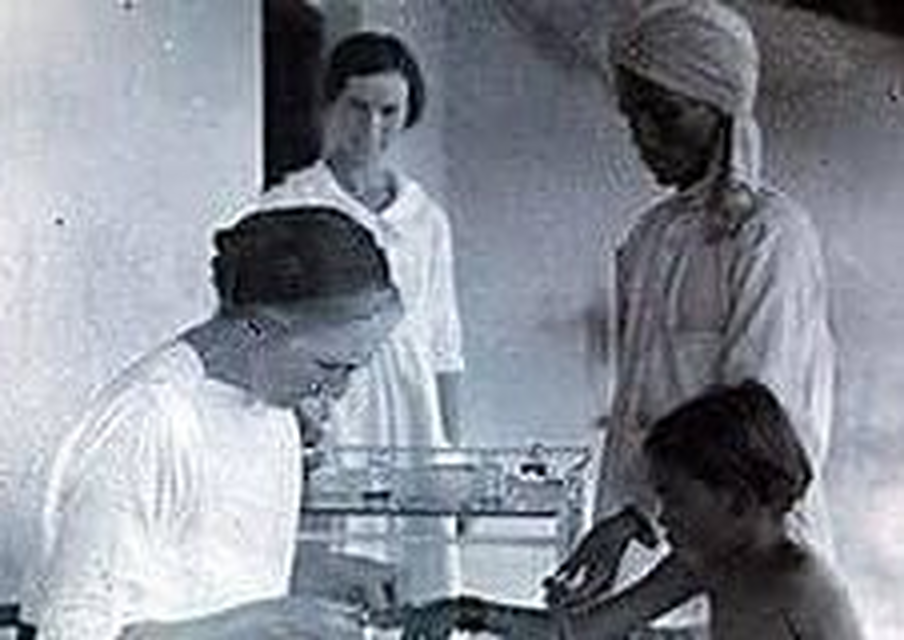
Dr Isabel Kerr: The Scottish Doctor Who Transformed Leprosy Care in India
Originally published 30 May 2026
Some lives shine quietly but leave a legacy that reshapes the world. The story of Dr Isabel Kerr (1875–1932) is one of those remarkable Scottish lives — a woman born in rural Moray who travelled halfway across the globe and became a pioneer in the treatment of leprosy in India. Her work, compassion, and leadership helped transform not only medical practice but also the dignity and humanity afforded to people living with the disease.
Born Isabel Gunn at Gollachy, near Buckie on 30th May 1875, she grew up in a modest Scottish farming community. Her early years gave little hint of the extraordinary path ahead, but she showed academic promise and a determination unusual for young women of her time. She trained first as a teacher, then pursued medical studies — a bold choice in an era when female doctors were still a rarity.
After qualifying, she married Dr Ernest Kerr, and together they joined the foreign mission movement that drew many Scots overseas in the late 19th and early 20th centuries.
India became the centre of their life’s work. In 1913, the Kerrs founded the Victoria Leprosy Hospital at Dichpalli (often called “the mini‑Taj Mahal” for its striking Indo‑Saracenic architecture). At that time, leprosy was one of the most feared diseases in the world. Misunderstood for centuries, it carried immense social stigma. People affected by it were often isolated, hidden away, or left without proper medical care.
Treatment options were limited, and the prevailing approach was custodial rather than curative.
Dr Isabel Kerr refused to accept that this was the best that could be done.
She brought to Dichpalli a combination of medical skill, organisational ability, and deep compassion. Her approach was revolutionary for its time. Instead of treating patients as outcasts, she insisted on seeing them as individuals deserving dignity, structure, and hope. She introduced improved sanitation, regular medical routines, and a holistic model of care that addressed not only physical symptoms but also emotional and social wellbeing.
Under her leadership, the hospital became a place of rehabilitation rather than exile. Patients were encouraged to work, learn skills, and participate in community life. Workshops, gardens, and educational programmes helped restore confidence and purpose. Long before modern antibiotics transformed leprosy treatment, these practical measures dramatically improved outcomes and quality of life.
Dr Kerr also became a respected authority on the disease. She wrote widely, lectured internationally, and corresponded with leading medical researchers. Her work helped shift global attitudes toward leprosy, emphasising that it was a medical condition requiring treatment — not a moral failing or a reason for lifelong exclusion. Her influence extended far beyond Dichpalli, shaping mission hospitals and government policy across India.
Her dedication did not go unnoticed. She was awarded the Kaisar‑i‑Hind Gold Medal, one of the highest honours available to civilians in British India, recognising her outstanding public service. Yet despite her achievements, she remained modest, practical, and deeply committed to her patients.
Tragically, her life was cut short in 1932 when she died in India at the age of just 56. But her legacy endured. The hospital she founded continued to serve thousands, and her writings influenced generations of medical workers. Today, as leprosy becomes increasingly treatable and the stigma surrounding it slowly fades, her work stands as a reminder that progress is built not only on scientific breakthroughs but also on compassion, courage, and the refusal to accept injustice as inevitable.
From a small community in Moray to the heart of India, Dr Isabel Kerr carried Scottish determination and humanity across continents. Her story deserves to be remembered — not only as a chapter in medical history, but as an example of how one life, lived with purpose, can change the world.