Bonnie Prince Charlie: The Romance, Reality and Ruin of Scotland’s Last Jacobite Prince
Originally published 30 January 2026
Few figures in Scottish history inspire as much emotion, debate, and enduring legend as Charles Edward Stuart — Bonnie Prince Charlie. To some, he is the tragic hero of a doomed cause; to others, a reckless romantic who gambled with the lives of Highland clans. What is certain is that his story shaped the cultural memory of Scotland in ways that still echo today.
A Prince Born in Exile
Charles Edward Louis John Sylvester Maria Casimir Stuart was born on 31 December 1720 in Rome, the grandson of the deposed King James VII and II of Scotland and England. Raised in the exiled Stuart court, he grew up steeped in the belief that restoring his family to the throne was both destiny and duty.
His early life was privileged but politically stagnant — a prince without a kingdom, trained in languages, horsemanship, and the arts of war, waiting for the right moment to reclaim what he believed was his birth right.
The Rising of 1745: Hope Ignites
In 1744, a French-backed invasion attempt collapsed in stormy seas. Undeterred, the 24‑year‑old prince made a bold decision: he would sail to Scotland alone, with little more than a handful of companions and a ship full of hope.
He landed on the west coast in July 1745 and rallied Highland clans to his banner. Against all odds, the Jacobite army swept to early victories:
Prestonpans (1745) — a stunning rout of government forces
Edinburgh captured — the capital welcomed him as a returning king
Advance into England — reaching as far south as Derby with 5,500 men
For a brief moment, the Stuarts stood on the brink of restoration.
The Retreat and the Road to Culloden
At Derby, the Jacobite commanders lost faith. With no French reinforcements and tens of thousands of government troops gathering, they forced a retreat back to Scotland.
The dream began to unravel.
On 16 April 1746, at Culloden Moor, the Jacobite army was crushed in a brutal 40‑minute battle that ended the Stuart cause forever. The aftermath was devastating — executions, transportation, and the systematic dismantling of Highland culture.
The Great Escape
For five months, Charles evaded capture across the Highlands and islands, sheltered by loyal supporters. The most famous episode is his escape disguised as “Betty Burke”, aided by Flora MacDonald, who helped him flee to Skye and eventually to France.
This daring flight cemented his legend as a romantic hero — a prince on the run, protected by the loyalty of ordinary Scots.
Decline, Disillusion, and Death
The decades after the Rising were far less glamorous. Exiled from France in 1748, Charles drifted across Europe, increasingly isolated and struggling with alcoholism. His relationships fractured, his political support evaporated, and his health declined.
He died in Rome on this day, 30 January 1788, aged 67, a faded symbol of a lost cause.
Legend vs. Legacy
Despite the failure of the ’45, Bonnie Prince Charlie became a cultural icon:
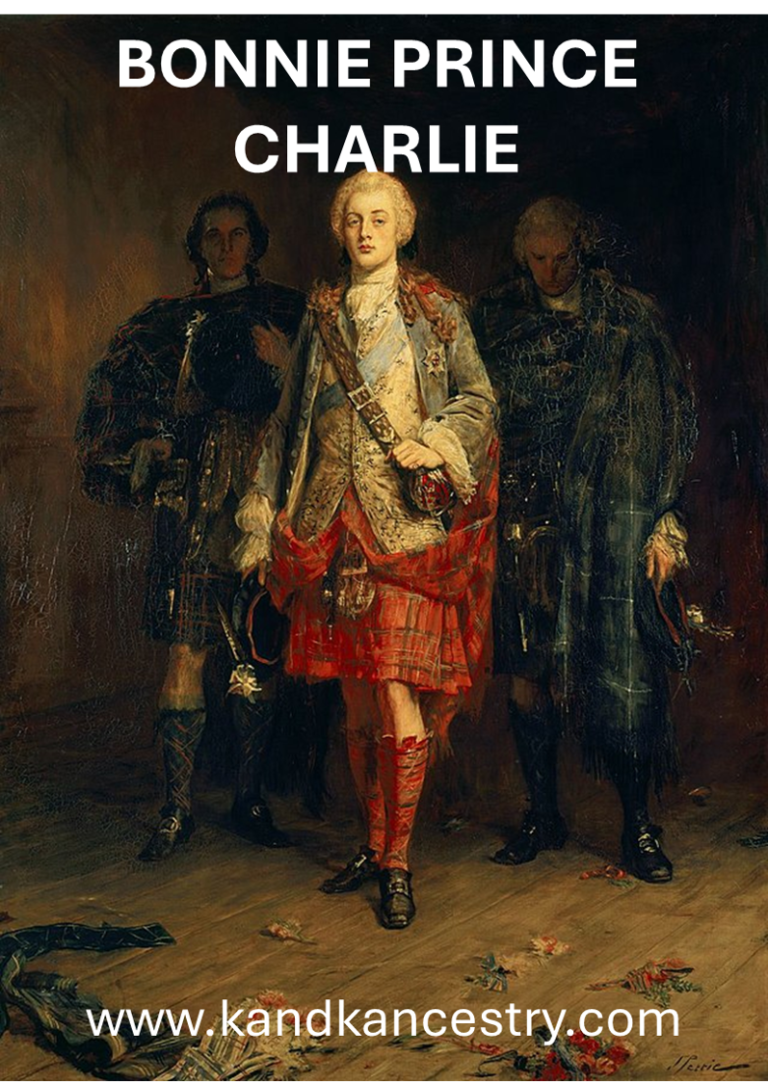
Celebrated in ballads, poetry, and romantic art
Remembered as a symbol of loyalty, courage, and tragic hope
Mythologised as the “Young Chevalier” — handsome, brave, and wronged
Yet historians also remind us of the complexities: his impulsiveness, strategic missteps, and the heavy cost paid by Highland communities.
A Prince Who Changed Scotland
Whether hero or flawed dreamer, Bonnie Prince Charlie’s impact is undeniable. His campaign reshaped Scotland’s political landscape and accelerated the suppression of clan culture, and left a legacy that still captures imaginations nearly 300 years later.
His story is not just history — it is heritage, identity, and the enduring power of myth.