
Alexander III of Scotland: A Golden Reign Cut Short
Originally published 13 July 2026
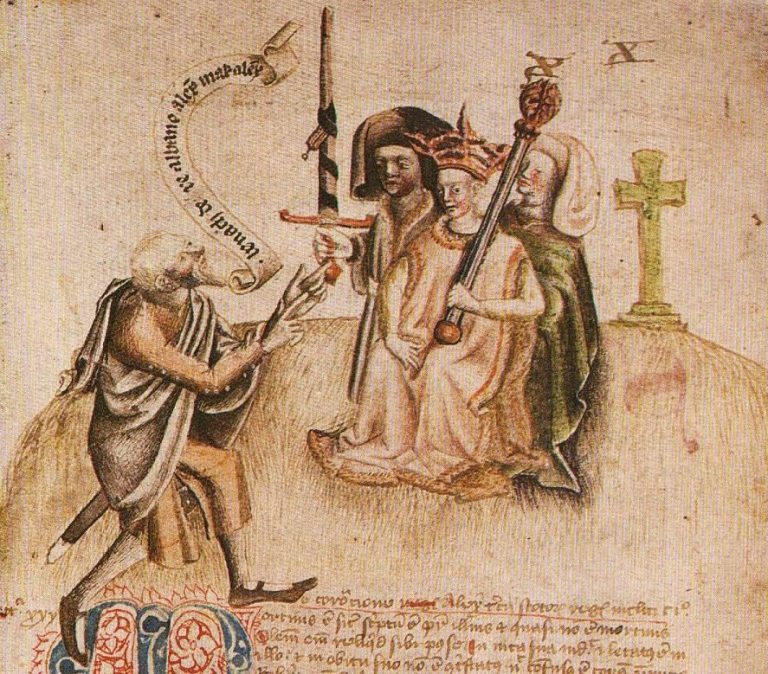
On 13th July 1249 Alexander III was crowned King of Scotland at the age of 7.
Alexander III (1241–1286) is remembered as one of Scotland’s most successful medieval kings — a ruler whose steady leadership brought peace, prosperity, and territorial unity to the kingdom. His reign began in childhood, flourished in adulthood, and ended suddenly in a tragedy that changed Scotland’s future forever.
A Child King in a Divided Realm
Born at Roxburgh Castle on 4 September 1241, Alexander was the only son of King Alexander II and Marie de Coucy. When his father died in July 1249, the seven year old boy was inaugurated at Scone and thrust into a political landscape dominated by powerful noble families.
During his minority, rival factions — led by the Comyns and the Durwards — competed for influence over the young king. These years were marked by tension, shifting alliances, and attempts to control the royal household. Despite the instability, Alexander’s position as king remained secure, and he gradually grew into his role.
A Marriage with Political Weight
On 26 December 1251, Alexander married Margaret of England, daughter of Henry III. He was ten years old, and she was eleven. The marriage was intended to strengthen relations between the two kingdoms, but Henry III used the occasion to demand homage from his young son in law. Alexander refused, asserting Scotland’s independence even at such a young age.
This early act of defiance set the tone for his reign: diplomatic, firm, and quietly determined.
Securing Scotland’s Western Frontier
One of Alexander’s greatest achievements was the acquisition of the Western Isles. His father had begun efforts to bring the Hebrides under Scottish control, but the project stalled with Alexander II’s death. When Alexander III reached his majority at 21, he revived the claim.
Norway’s King Haakon IV responded with a major naval expedition in 1263. After negotiations and a storm disrupted clash near Largs, Haakon withdrew and later died in Orkney. In 1266, his successor Magnus VI agreed to the Treaty of Perth, formally ceding the Hebrides and the Isle of Man to Scotland.
This diplomatic victory secured Scotland’s western seaboard and completed a long standing national ambition.
A Prosperous and Peaceful Kingdom
Under Alexander’s rule, Scotland enjoyed a period of stability rare in medieval Europe. Trade expanded, agriculture strengthened, and royal authority was respected across the realm. Chroniclers later described his reign as a time of “law and peace,” when the kingdom’s resources grew and its borders were secure.
This era of prosperity helped shape the cultural and political identity of Scotland for generations.
Family Losses and a Fragile Succession
Despite his political success, Alexander’s personal life was marked by sorrow. His wife Margaret died in 1275, and all three of their children — Margaret, Alexander, and David — died young. By 1284, his only living descendant was his granddaughter, Margaret, Maid of Norway.
To secure the succession, Alexander married again in 1285, taking Yolande de Dreux as his queen. The hope of a new heir brought optimism to the court, but fate intervened before that hope could be realised.
A Sudden and Fatal Accident
On the stormy night of 19 March 1286, Alexander set out from Edinburgh to join Queen Yolande in Kinghorn. Despite repeated warnings about the weather and darkness, he insisted on travelling. Somewhere near the coast, separated from his companions, his horse lost its footing. Alexander was found dead the next morning, having suffered a fatal fall.
He was 44 years old.
The End of an Era
Alexander III’s death ended a period of stability and opened a succession crisis. Queen Yolande’s pregnancy ended without a surviving child, leaving the young Maid of Norway as heir. Her own death in 1290 would plunge Scotland into years of uncertainty and conflict.
Yet Alexander’s legacy remains clear: he was a king who strengthened Scotland’s borders, fostered prosperity, and governed with a steady hand. His reign is remembered as one of the brightest chapters in medieval Scottish history — a golden age brought to an abrupt and tragic close.